
Understanding The Osseointegration Stage In Single-Tooth Restoration
Dental implant osseointegration is the fundamental biological process in which living jawbone fuses directly to a biocompatible titanium post. This natural integration provides foundational stability for custom restorative crowns, preserving facial structural integrity while restoring full masticatory function in patients undergoing single-tooth replacement.
Replacing a lost tooth involves more than simply closing a gap in your smile. At Marino Dental on Darrow, our restorative team utilizes advanced volumetric 3D CBCT planning to guide exact fixture placement. Following surgical placement, the body initiates osseointegration, the gradual structural bonding between the living bone matrix and the surface of a titanium implant. Specialized cell activity encourages bone tissue to build tightly around the post over several months. Patients experience seamless transitions during daily commuting along the Darrow Road corridor as their temporary restoration protects the site. Furthermore, securing a strong biological foundation ensures that your final biocompatible ceramic crown withstands the pressures of daily chewing.
The Biological Cellular Process of Bone Fusion
Bone tissue behaves as active living material rather than a static structure. Once a dental implant post is placed in the jaw, microscopic cells called osteoblasts attach to its textured titanium surface. These specialized bone-building cells manufacture structural proteins and deposit minerals that solidify into a strong bone matrix. Over several weeks, new bone networks encase the post completely, mirroring the natural function of a root. Without this vital integration, replacement teeth cannot support normal biting forces. Advanced digital intraoral impression tools verify precise anatomical alignment before placing the final custom crown.
Comparing Restorative Single-Tooth Replacement Options
| Restoration Attribute | Dental Implant Osseointegration | Traditional Fixed Dental Bridge |
| Structural Foundation | Integrates directly with jawbone tissue | Anchors to adjacent natural teeth |
| Jawbone Preservation | Stimulates bone density permanently | Allows gradual bone absorption beneath gap |
| Adjacent Tooth Alteration | Requires zero modification of surrounding teeth | Requires shaving down healthy neighboring enamel |
| Long-Term Durability | Designed as a permanent structural solution | Requires replacement after ten to fifteen years |
Essential Milestones in the Implant Healing Process
- Diagnostic volumetric imaging maps the precise underlying jawbone density before the procedure begins.
- Titanium fixture placement provides initial mechanical stability within the supporting bone tissue.
- Cellular bone growth fuses directly to the implant surface during primary healing weeks.
- Digital intraoral impressions capture detailed spatial dimensions for ideal crown customization.
- Custom ceramic crowns attach securely to deliver full bite strength and natural aesthetics.
Common Questions About Dental Implant Osseointegration
Navigating the timeline for tooth replacement often raises questions about comfort, recovery time, and long-term durability. Understanding how your jaw heals around a new implant post helps relieve anxiety and builds confidence throughout your care journey. Below, our clinical team addresses the most common questions patients ask when considering single-tooth restoration.
How long does the dental implant osseointegration process take?
Most patients require three to six months for the jawbone to fuse completely with the implant post. You can comfortably carry out your normal daily routine during this healing phase while wearing a temporary protective restoration. Complete cellular integration ensures your replacement tooth achieves optimal long-term mechanical stability.
Will I experience severe pain during the osseointegration healing stage?
Significant discomfort is rare during bone healing because bone tissue lacks sensitive pain receptors. Our team provides detailed home care guidelines and gentle conscious sedation options during placement to guarantee your ongoing comfort. Mild localized tenderness resolves within a few days using standard over-the-counter anti-inflammatory medication.
What happens if bone fails to fuse properly with the implant?
Implant failure occurs infrequently and is usually identified early through precise diagnostic volumetric monitoring. Should healing stall, our compassionate doctors adjust your treatment plan to rebuild bone support before replacing the fixture. Maintaining excellent oral hygiene and attending scheduled checkups minimize risk and support permanent restoration success.
Schedule Your Dental Implant Consultation in Akron
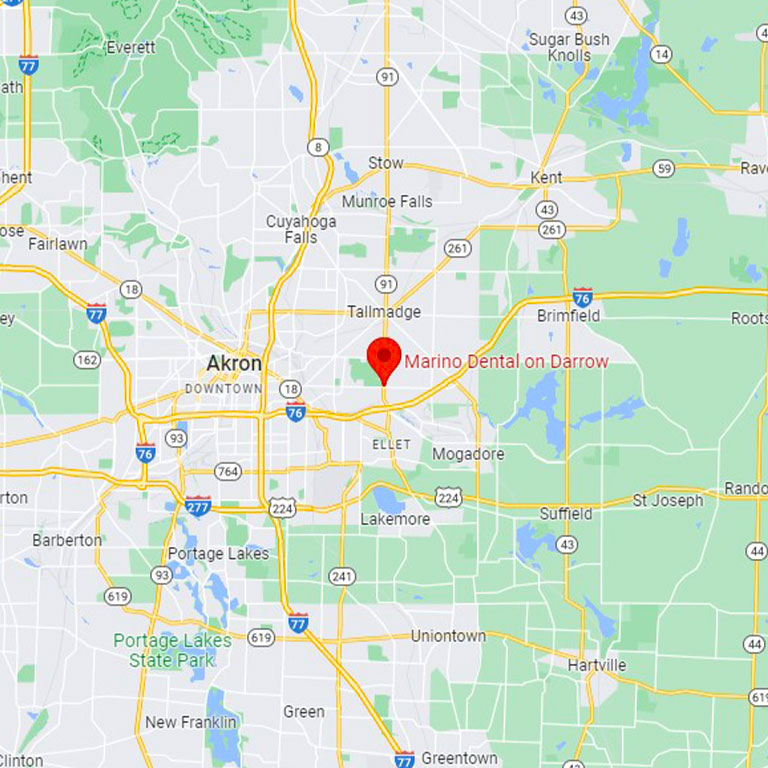
Achieving permanent tooth restoration begins with a personalized diagnostic assessment tailored to your schedule. Conveniently situated near the Route 8 interchange and the I-76 corridor, our office offers seamless access for busy commuters. We proudly welcome individuals from the Ellet Community District and neighborhoods across Akron and Fulton Airport. Contact Marino Dental on Darrow today to schedule your single-tooth implant consultation and protect your oral health.